


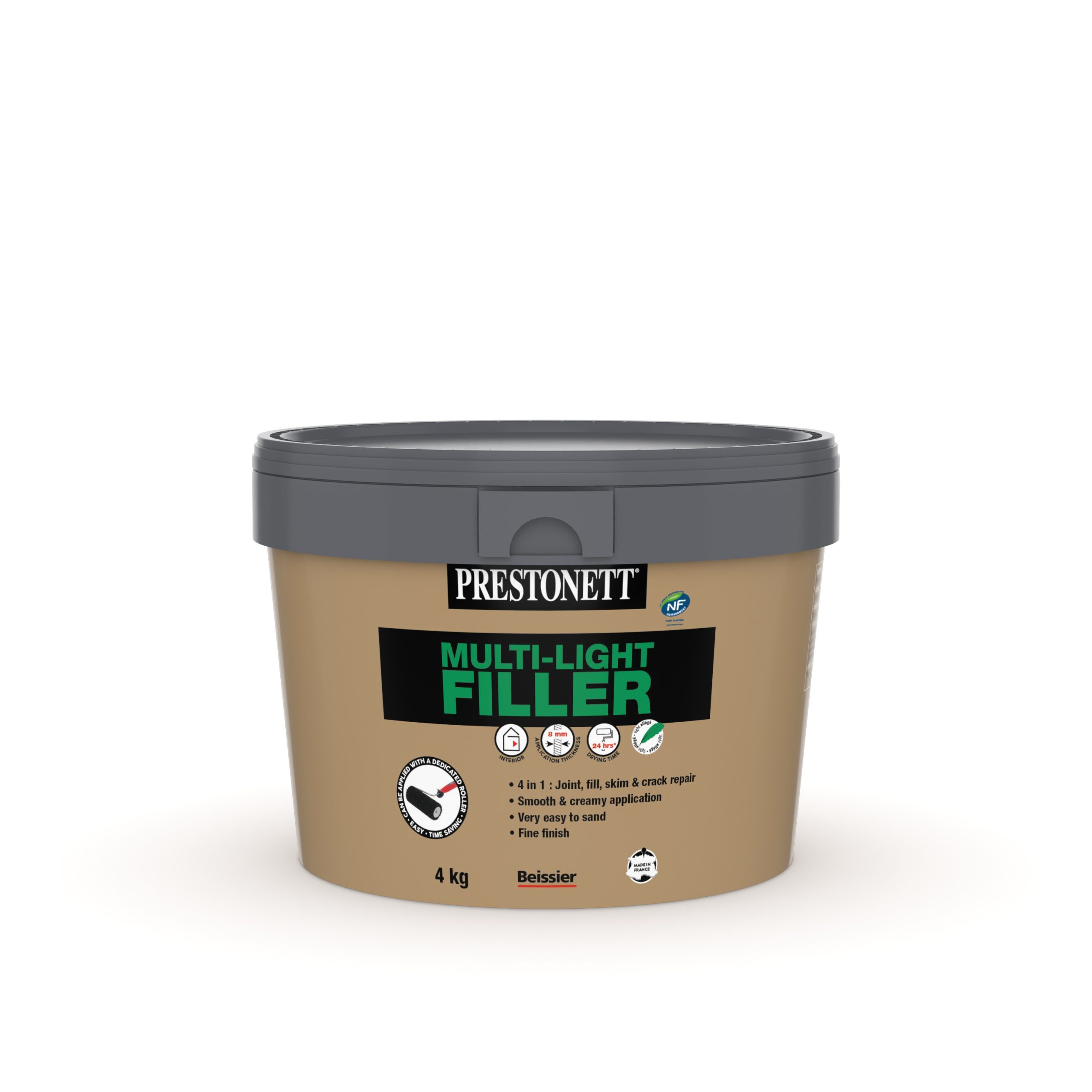
Product info
- 4 in 1
- Fills up to 8 mm
- Very smooth application
Our categories
By brands
By application
This article was useful to 0 person(s)
Is your coating blistering and peeling once dry? Don’t panic! In this video, Raphaël Estrella, Technical Advisor at Beissier, explains why your wall coating is detaching—whether due to humidity, dust, insufficient material, or improper surface preparation—and demonstrates how to easily fix blistering issues using PRESTONETT® filling compounds.
Coatings are designed to prepare surfaces, but sometimes, detachment occurs between the coating and the substrate after application. This phenomenon is known as blistering.
Our expert, Raphaël Estrella, outlines the key questions to ask and the essential steps to follow when facing blistering issues.
Localized blisters appear in specific areas such as a ceiling, wall, or corners.
Generalized blisters involve large sections of peeling coating forming multiple patches.
In 90% of cases, blistering occurs in a humid environment. Water damage, ceiling or wall infiltration, insufficient material under joint tape, poor surface assessment, or inadequate preparation can all lead to this issue. Each substrate—whether concrete, cement, plaster, or paint—requires specific preparation. If you have any doubts about the preliminary steps for coating application, check out our expert Jérémy Poupart’s video, where he explains the key preparatory steps before applying a coating.
Once You’ve Identified the Cause, Start Repairing the Blisters!
In this video, our expert Raphaël Estrella recreates a blister on a joint tape, one of the most common on construction sites, typically caused by insufficient material underneath the tape.
Use a utility knife to cut open the blister and assess its condition.
Check for signs of powdering (common with soft materials like plaster), moisture, or grease contamination (often due to soot or kitchen grease deposits).
If any of these issues are present, dust off the surface using a sponge or brush.
Our technical advisor recommends Beissier Prestonett Interior Filler, a filling compound known for easy application and sanding.
Once applied, let it dry and sand with 150-180 grit sandpaper. The blister will disappear, leaving a smooth and even surface!
Remember: A well-prepared worksite means fewer blisters to fix!
Jérémy is the author of this page. By giving your opinion on this content, you will help improve its content


